



















15% for everyone? – Global minimum tax vs. tax havens
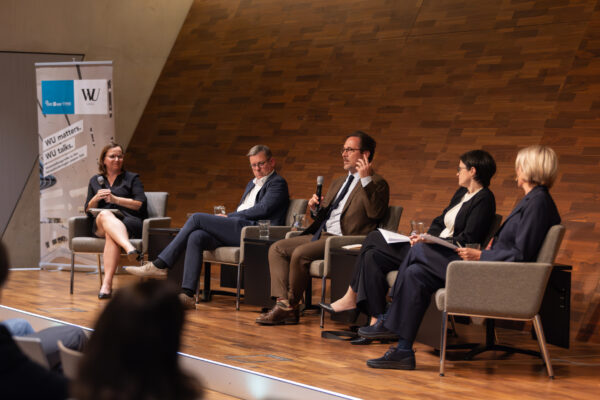
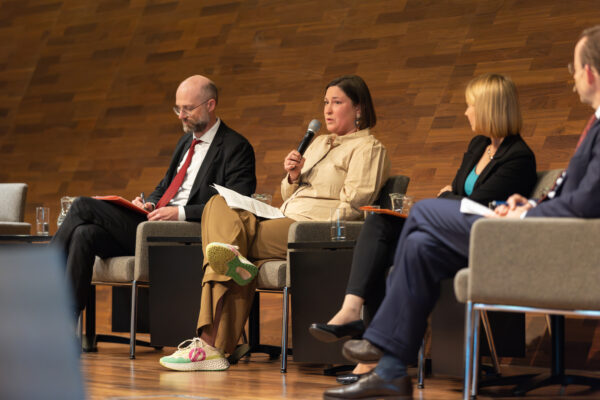
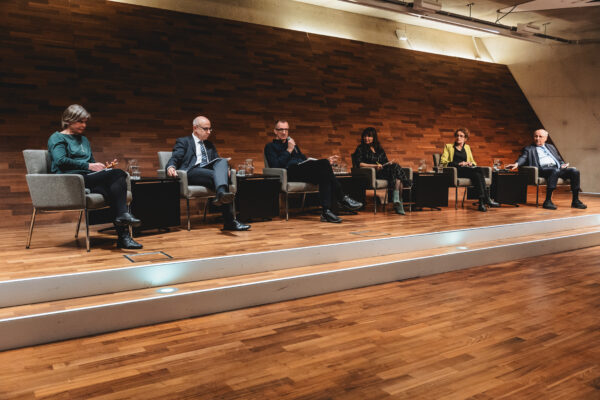
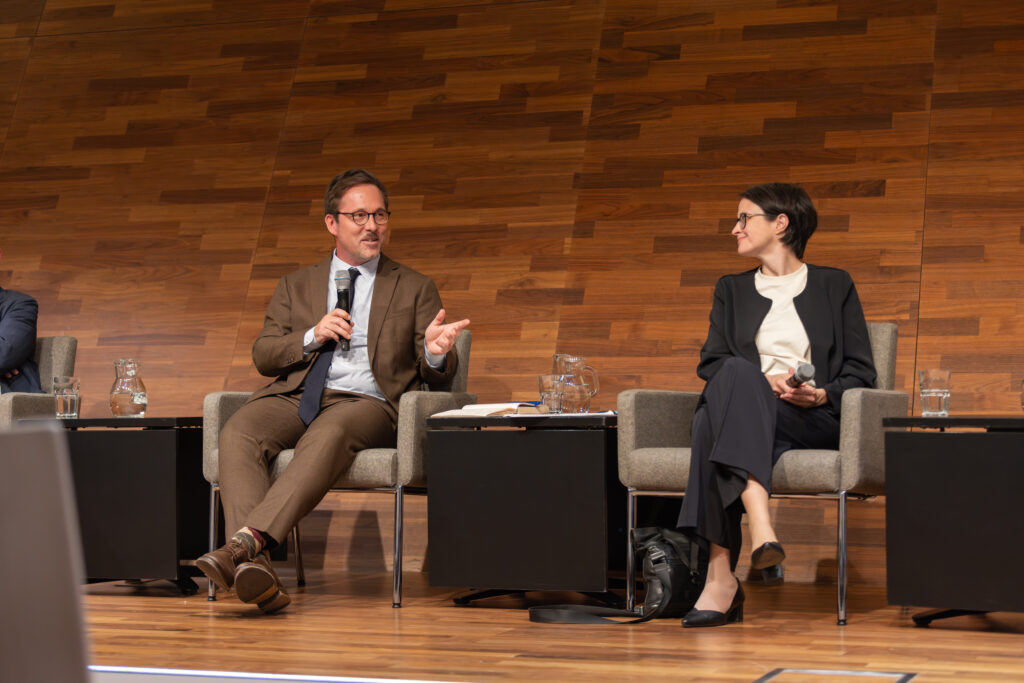
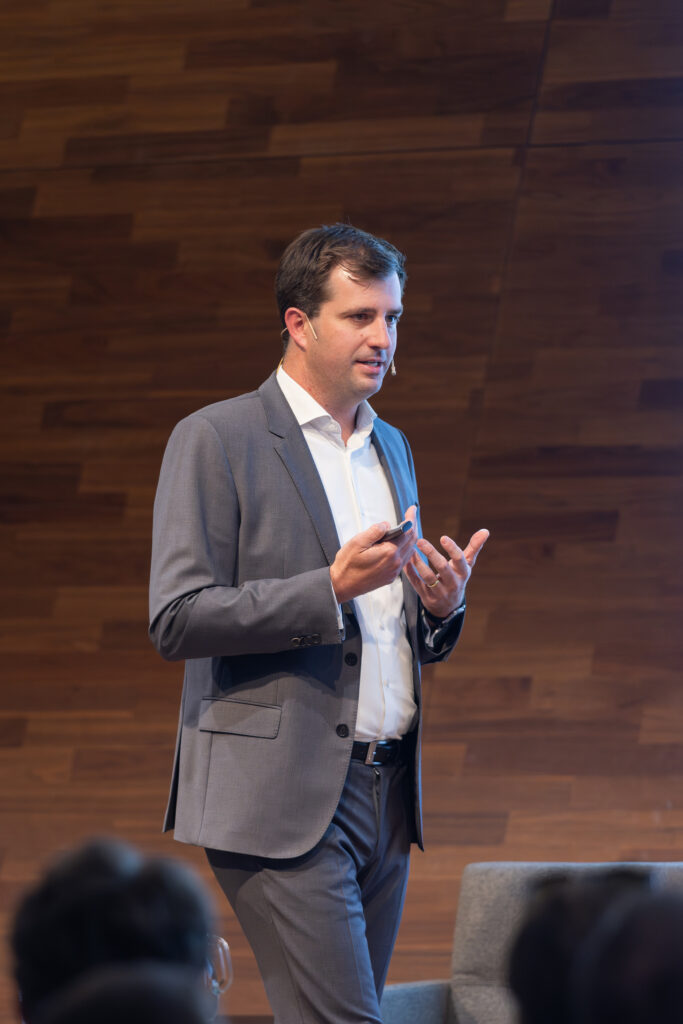
“Global Minimum Tax vs. Tax Havens” was the topic of this semester’s final “WU matters. WU talks.” event. Tibor Hanappi (IMF), Christina Reichart (OMV), Jana Schultheiß (AK Vienna), and Alfons Weichenrieder (Goethe University / WU Vienna) then discussed the evening’s main question: Is the global minimum tax a good idea or just a bureaucratic monster?
140 countries voted in favor of the global minimum tax. How many have actually implemented it? According to audience estimates: 60% guessed 20 countries. In reality, however, the number is just over 50—including 27 EU member states. So is it just a European project after all?
Revolution, bureaucratic monster, or already obsolete?
“80% of tax revenue is borne by workers and consumers in Austria”
Jana Schultheiß, Vienna Chamber of Labor, Head of the Tax Law Department
Jana Schultheiß from the Vienna Chamber of Labor defended the global minimum tax, arguing that it represents remarkable progress. If only because 140 countries have actually agreed on something at all. She particularly emphasized that 80% of Austria’s tax revenue is borne by workers and consumers. The contribution from corporations is incredibly low, even though they benefit from the same welfare state.
Christina Reichart saw things differently from a corporate perspective. OMV already pays well over 40% in taxes—so the minimum tax is not relevant to them in terms of amount. Why she still sees the minimum tax as a problem:
“It’s an absolute bureaucratic monster that we’ve created here.”
Christina Reichart, Vice President Tax Group, OMV AG

Could it have been avoided?
The real problem, according to Weichenrieder’s argument, arose 30 years ago when the U.S. introduced the so-called “check-the-box rules”: U.S. corporations could freely choose how their foreign subsidiaries would be treated for tax purposes. Ultimately, this was merely a tax simplification for Americans. And this led directly to tax avoidance.
“Something has completely gotten out of hand. […] It’s a behemoth.”
Alfons Weichenrieder, Professor of Public Finance, Goethe University and Vienna University of Economics and Business
Will the minimum tax still exist in ten years?
According to Reichart and Schulheiß: Yes, if only because of sunk costs. Tibor Hanappi, a former OECD economist who was personally involved in the negotiations, emphasized that any changes in international tax law usually have long-term effects. Weichenrieder was significantly more skeptical, as he doubts that the minimum tax will find support outside of Europe: “The rest of the world will quietly bury it,” he added, “and we Europeans will be left holding the bag.”




Curious? Watch the entire discussion here:
Even better? Just come to the next event and join the conversation!
In the regularly held “WU matters. WU talks.” panel discussions, forums, and lectures, researchers and experts from the business and institutional sectors share their expertise and discuss current topics with the interested public. Sign up for the newsletter here so you never miss out on the latest topics!