






02.02.2026
Peer Support and Coming Out: Interview with Jan Gromadzki on the IamLGBT Study
Pride Month is about more than visibility. It’s about rights, fighting discrimination, remembering history, and political activism. Understanding how social connections influence key decisions like coming out is an important part of this. A recent study by WU researcher Jan Gromadzki and Przemysław Siemaszko, published in the European Economic Review, explores this topic. Using data from a Twitter campaign in Poland (#IamLGBT), the researchers analyzed how peer behavior shapes the decision to disclose one’s LGBTQ identity. In our interview, Jan explains why people rely more on close friends than public figures and how organizations can foster supportive environments.
IamLGBT Study: Key Findings
- Peer influence matters: People are more likely to come out when their close peers do.
- Close peers, not influencers: The effect comes from mutually connected peers with shared experiences, not from large accounts or influencers.
- Supportive organizations: Employers can help by opposing discrimination, training leaders, encouraging peer networks, and respecting personal decisions.
„The key takeaway is that social networks have a substantial impact on the probability of coming out by LGBTQ people. People are more likely to publicly disclose their LGBTQ identity after seeing peers in their own network do the same.“ (Jan Gromadzki, Assistant Professor, Department of Economics, WU)
WU Blog: What would you say is the key result of your study, and did any of the findings surprise you?
Jan Gromadzki: The key takeaway is that social networks have a substantial impact on the probability of coming out by LGBTQ people. People are more likely to publicly disclose their LGBTQ identity after seeing peers in their own network do the same. These peer effects are particularly strong when individuals see positive reactions to their peers’ coming out.
What I found most striking is that these effects were entirely driven by close, mutual relationships. We often tend to discuss the role of public figures, but it seems that their immediate impact on the decisions of LGBTQ people is minimal. Instead, when making high-stake decisions, individuals learn about potential social costs or benefits by looking at people similar to them in their immediate environments.
WU Blog: What motivated you to study coming out and social networks in the first place?
Jan Gromadzki: Economists tend to focus on persistence of culture, yet if people from 200 years ago were to time-travel to 2026, the culture shock they experienced would be as powerful as the technology shock. The number of openly LGBTQ people has risen very quickly in recent decades, but we still know surprisingly little about the concrete mechanisms behind that change. Coming out is also very difficult to study, because it is almost never observed in real time by researchers. One of these rare chances occurred in 2019, when hundreds of Polish Twitter users joined a viral coming out campaign. As an empirical economist interested in LGBTQ economist, I had to use this amazing opportunity to investigate coming out.
WU Blog: Your research highlights the importance of support in everyday environments. What concrete steps can organizations take to help LGBTQ people feel safer and more encouraged to be openly out at work?
Jan Gromadzki: First, organizations should make it clear that discrimination and harassment will not be tolerated. Second, managers and team leaders should be trained to respond supportively when someone comes out. Third, it helps to create spaces where LGBTQ employees and allies can form real peer networks, for example through employee groups. Finally, organizations should respect that coming out is an individual decision: the goal is not to pressure people to disclose, but to lower the expected social cost of being open if they want to be.
WU Blog: How long have you been at WU, what is your position and department, and what are you currently working on in your research?
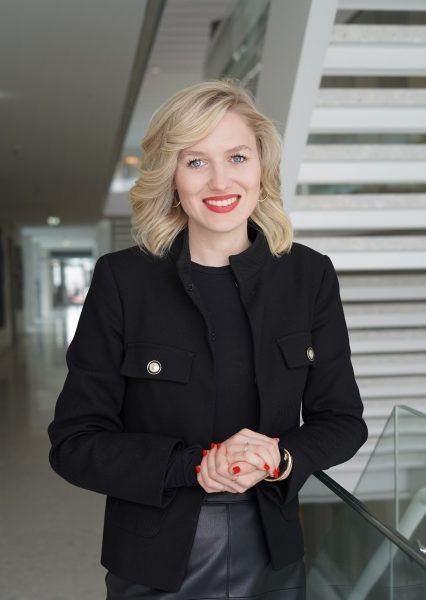
Jan Gromadzki: I joined the Department of Economics as an Assistant Professor (postdoc) in 2023. I am also part of the INEQ Research Institute at WU. I continue working on LGBTQ populations: I am investigating labor market outcomes of transgender individuals in Austria and United Kingdom, as well as the effects of anti-LGBTQ laws on migration intentions. More broadly, I am interested in the determinants of cultural change and labor market inequalities.