





AI Controversies! – Do We Still Need Education?
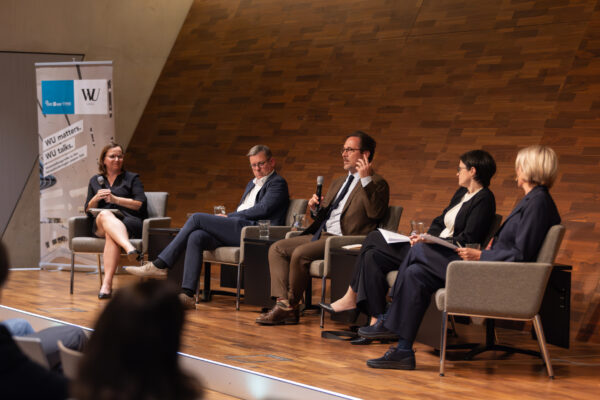
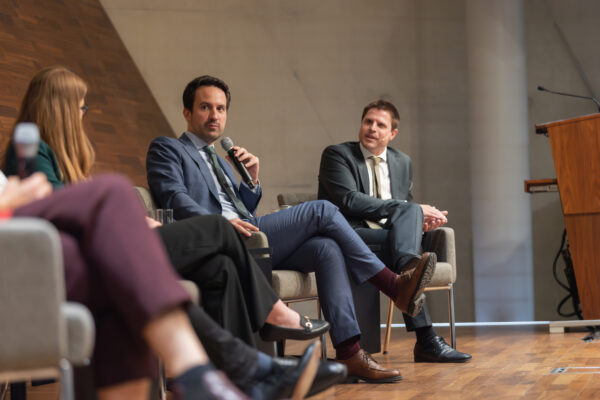
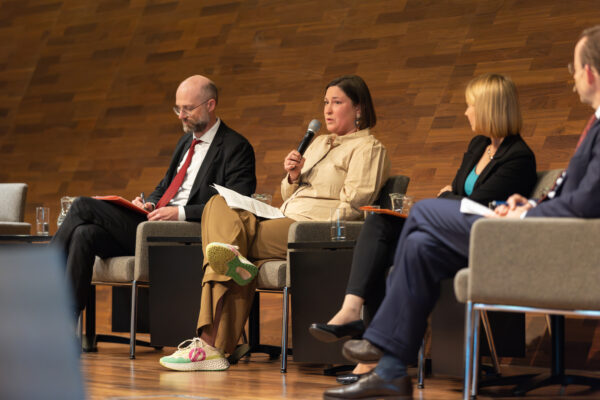
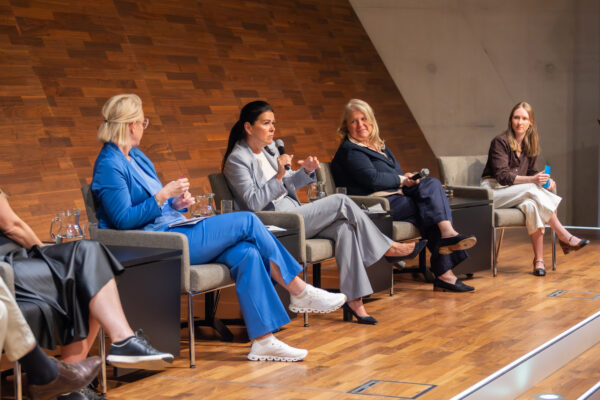
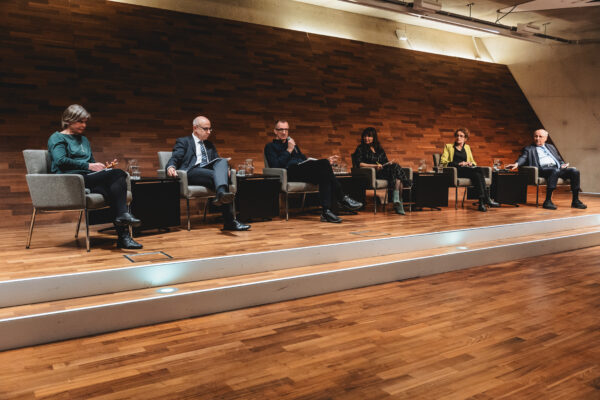
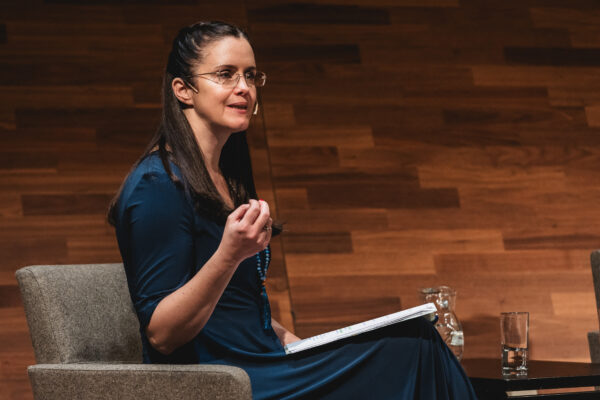
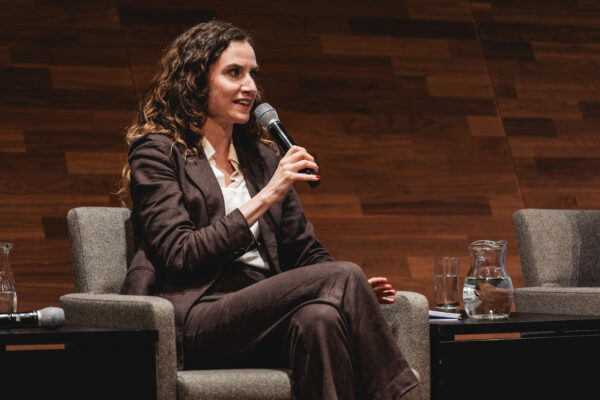
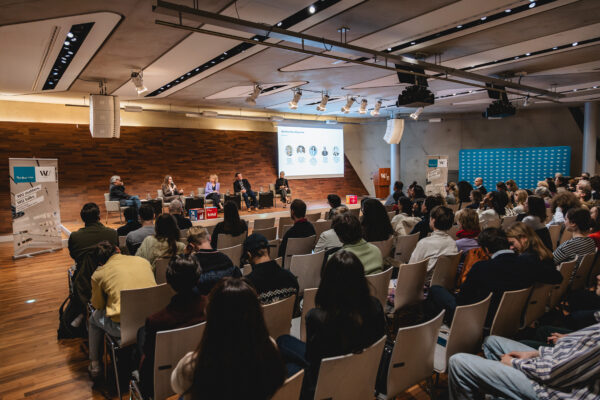
“AI Controversies!” was the theme of the latest “WU matters. WU talks.” event. Minister of Education Christoph Wiederkehr, Anita Eichinger, Director of the Vienna Library, Marie-Christine Kainz, Vice Chair of the ÖH WU, and Alexander Mädche, Professor at KIT, discussed what education can actually still achieve if AI writes the texts and takes over critical thinking. And where does that leave humanity?
“We are currently training people for unemployment” – brand eins.
“Why the A.I. Job Apocalypse won’t happen” – New York Times.
Moderator Thomas Grisold kicked off the evening with these headlines. A poll on our WU Instagram account revealed that 55% of the audience voted for the more optimistic NYT headline.
99.9% of students use AI—even though they were never properly taught how
Last Wednesday, Marie-Christine Kainz shared the students’ perspective. Ever since generative AI has been around, practically every student has been using it. And why are students so confident about using it? Because it works. So why stop using it if AI makes life easier? According to Kainz, we should be focusing on a completely different question: “WHY do students use AI so much in the first place?”

“AI could become a massive dumbing-down machine”
Anita Eichinger, Director of Wienbibliothek
Here’s another interesting comparison from business IT specialist Alexander Mädche: AI is like a super-powerful calculator. You use it – but not all the time and not for everything. And you have to understand it to use it effectively: “I don’t go to the bakery with my calculator and then check if the change is correct.” That’s exactly why it’s important to start early and actively guide students in using AI.
A Guide to Being Human:
- Critical thinking, communication, collaboration, creativity
The four key skills of the 21st century.
Yes, AI can certainly help, but when it comes to these skills, people ultimately still rely on their own ability to think. - Building emotional connections
And starting right there in the classroom. Group discussions, more oral exam formats. - Working with real people on real problems
Send mixed teams to tackle a real-world problem – whether they use AI or not. - Dealing with frustration
Experiencing frustration is a part of life; AI significantly reduces this experience.
If we don’t actively cultivate our humanity, we risk losing our ability to think for ourselves and to exercise critical judgment. After all, the brain is like a muscle: if it isn’t properly exercised, it withers away.
Curious? Watch the entire discussion here:
Even better? Just come to the next event and join the conversation!
In the regular “WU matters. WU talks.” panel discussions, forums, and lectures, researchers and experts from the business and institutional sectors share their expertise and discuss current topics with the interested public. Sign up for the newsletter here so you never miss out on the latest topics!
In the next WU matters. WU talks: Global Minimum Tax vs. Tax Havens
Switzerland, the Cayman Islands, etc. – how sensible is it to shift profits to tax havens? Will the new global minimum tax law counteract this? And how do economic tensions factor into this?
- 10th June
- 6pm
- LC Ballroom 1 & Livestream
Keynote:
Harald Amberger, WU Vienna, Professor
Discussion:
Tibor Hanappi, International Monetary Fund, Senior Economics
Christina Reichart, OMV AG, Vice President Tax Group
Jana Schultheiß, Vienna Chamber of Labor, Head of Tax Law Department
Alfons Weichenrieder, Goethe University and WU Vienna, Professor
Moderated by:
Eva Eberhartinger, WU Wien, Professor