















02.02.2026
How language shapes our understanding of debt and lending
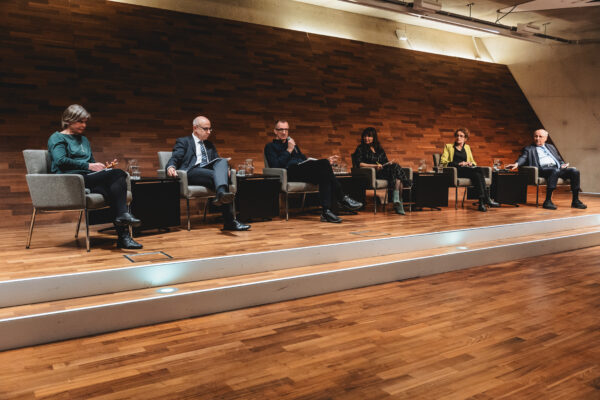
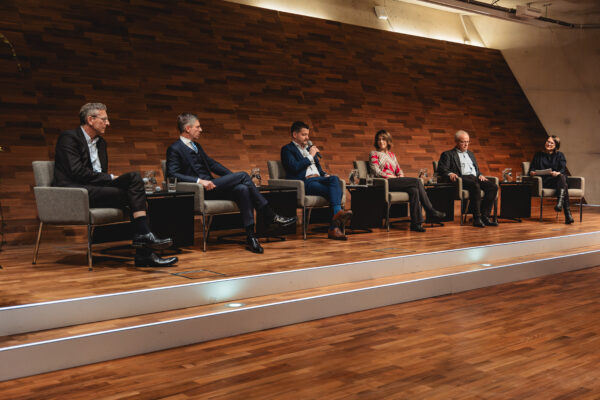
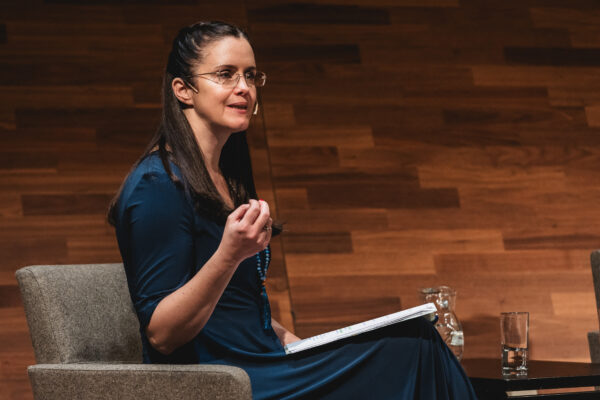
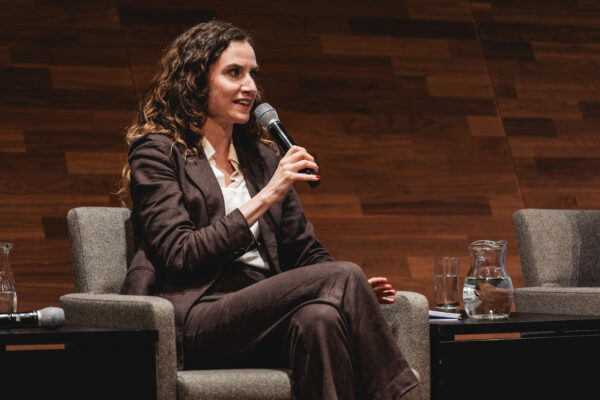
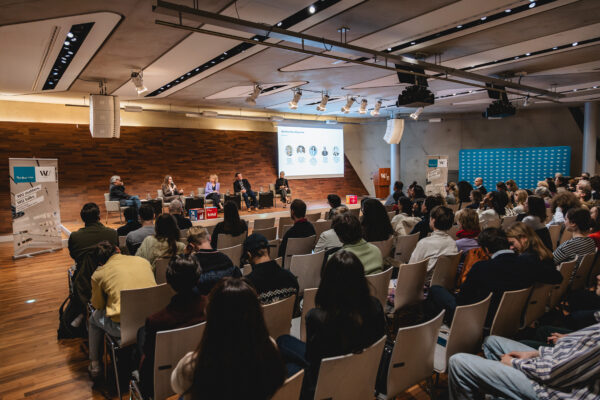
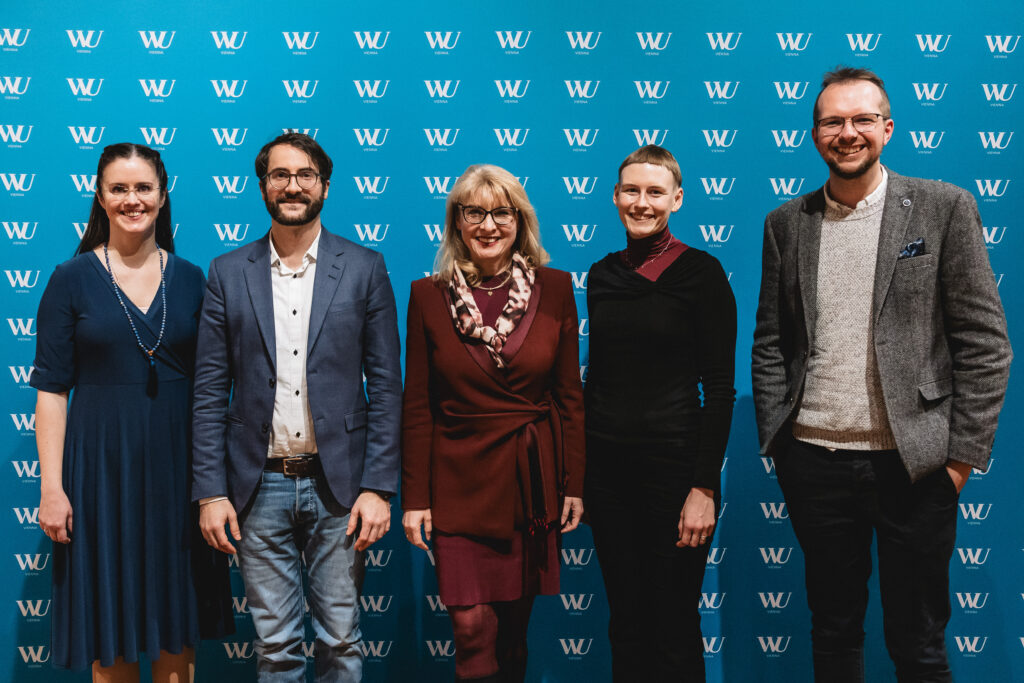
What makes people turn to loans in moments of financial strain? And how does language influence these decisions? This question set the tone for the latest “WU matters. WU talks.” event on January 21, 2026, with Ursula Lutzky (WU), Bettina Fuhrmann (WU), Stefan Angel (WIFO), and Julia Jakob (OeNB). The panel was moderated by Mathew Gillings (WU).
When borrowing sounds easy: The language of payday lending
Payday loans – short-term, high-interest products – may seem like a niche phenomenon, yet they reveal something broader about people’s financial choices. Professor Ursula Lutzky explained how the ongoing cost-of-living crisis in the UK has fundamentally reshaped financial decision-making, particularly as food and energy prices surged.
Her research draws from corpus linguistics, examining digital texts written by financial institutions and payday lenders. The contrast, she noted, is striking: While regulations, such as affordability checks, have tightened, payday lenders continue to promise instant solutions – “quick cash” – while downplaying the risks. Financial vulnerability rises in parallel. Low-income households, hit hardest by inflation, are increasingly turning to short-term loans. Lutzky’s conclusion was clear:
“We need to enable the public to interpret the intricacies of this promotional discourse, so that they are not manipulated by the language that is being used.”
Financial literacy, she argued, remains a crucial line of defense.
Austria’s young borrowers: A growing trend
The increasing popularity of payday loans is not a uniquely British issue, Bettina Fuhrmann emphasized. In Austria, borrowing among young people is becoming commonplace. According to her, “one third of 14‑year‑olds have already borrowed money,” with buy-now-pay-later services playing an increasingly prominent role. Talking about money, however, remains fraught with discomfort. Many young people feel insecure discussing financial problems, and hesitation can make matters worse. As Fuhrmann put it:
“If you are in a difficult situation, not seeking help is the next bad decision.”
Stefan Angel (WIFO) added that debt counseling data show that inadequate money management and gaps in financial education are among the most common causes of over‑indebtedness, exacerbated by the broad availability of consumer loans. Building resilience, he argued, requires policies that help households strengthen their financial resilience. For example, savings incentives like the UK’s “savings lottery.”
Stigma, social media, and financial resilience
Julia Jakob (OeNB) stressed that shame often prevents people from seeking help, noting that “reducing stigma is absolutely key.” While some debt stems from poverty or unmet basic needs, problems financial literacy alone cannot solve, other forms of borrowing are closely linked to spending habits and a lack of financial awareness, where education can make a difference. As many people rely on social media for guidance when financial conversations at home feel difficult, “finfluencers” gain increasing influence. Jakob cautioned audiences with a straightforward reminder:
“If something sounds too good to be true, it probably is.”
Watch the entire discussion:
Want to join the discussion?
“WU matters. WU talks.” is our series of panel discussions and public lectures where researchers and experts from leading businesses and institutions share valuable insights and discuss current topics with the interested public. Sign up here for our newsletter so you don’t miss our next expert discussions on the hot topics of our time!